5 minutes = 21× more qualified leads. We speed up your follow-up.

+1 301-701-2233

Benefits of AI in Business Why Artificial Intelligence Is a Game Changer Unleash Your Genius
AI

Benefits of AI in Business: Why Artificial Intelligence Is a Game-Changer

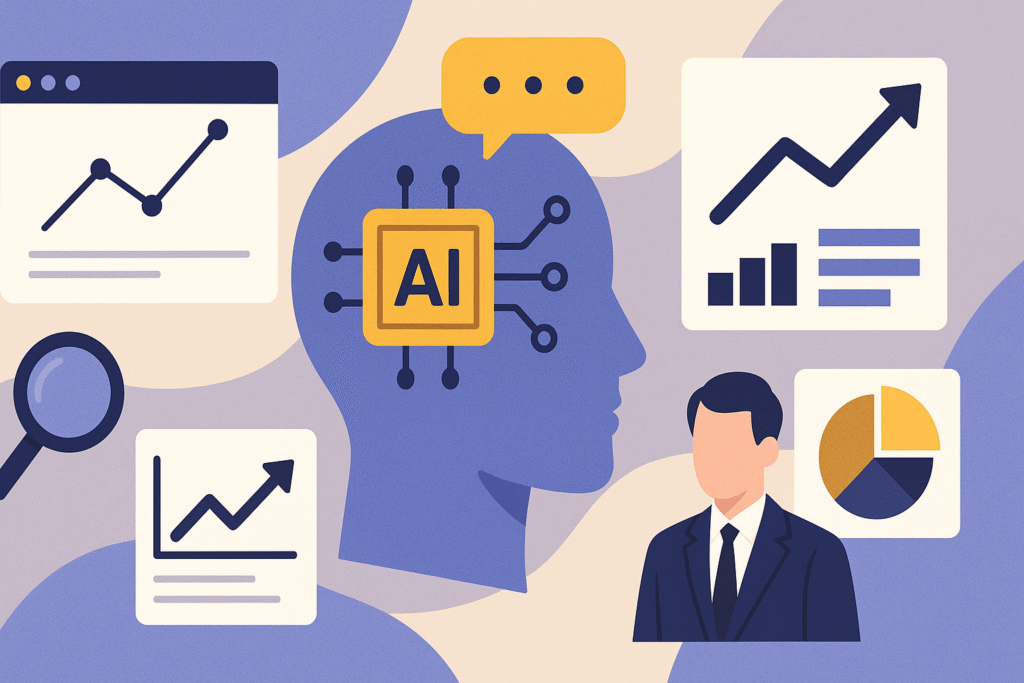
Artificial intelligence (AI) is no longer a concept confined to science fiction; it’s the engine powering modern business growth. From the personalized recommendations on your favorite shopping site to the automated chatbots that answer your questions instantly, AI is already woven into the fabric of our daily lives. For businesses, this technology isn’t just about buzzwords—it’s about creating tangible value. Companies of all sizes are leveraging AI in business operations to increase efficiency, cut costs, and get a competitive edge. If you’re wondering how AI can transform your organization, you’ve come to the right place. What Does AI in Business Mean? At its core, artificial intelligence in a business context refers to the use of smart technologies that can perform tasks that typically require human intelligence. This includes everything from analyzing vast amounts of data to understanding natural language and recognizing patterns in images. Some of the key AI technologies being used today include: Just as a solid understanding of a topic like What is SEO and How Does It Work? is crucial for digital growth, grasping how these AI advantages for companies can be applied is essential for future-proofing your business. Key Benefits of AI in Business Businesses are finding that the benefits of AI extend across every department, from finance to marketing. Let’s explore some of the most significant advantages. 1. Increased Efficiency and Productivity One of the most immediate gains from implementing AI is a boost in productivity. AI can take over repetitive, time-consuming tasks like data entry, report generation, and customer service inquiries. By automating these workflows, human employees can focus on more strategic and creative work that requires critical thinking and problem-solving. AI assistants can also streamline internal processes, helping teams collaborate more effectively and get things done faster. 2. Cost Savings When a business automates tasks, it significantly reduces the need for manual labor hours. This leads to cost savings and a reduction in human error. AI-powered forecasting tools can also help companies predict demand and manage inventory more accurately, which minimizes waste and saves money. 3. Enhanced Decision-Making AI systems can analyze massive datasets in minutes, something that would be impossible for a human to do. This provides businesses with deep, data-driven insights that lead to better, more informed decisions. By using predictive analytics, you can forecast market trends, identify potential risks, and optimize your strategies for maximum impact. Just as understanding the SEO Meaning in Business helps you make data-driven decisions about your digital presence, AI provides the data you need to make smart moves across your entire operation. 4. Improved Customer Experience Customers today expect quick, personalized service. AI chatbots and virtual assistants can provide 24/7 support, answering common questions and resolving issues instantly. AI-powered recommendation engines, like the one used by Amazon, can also analyze customer behavior to offer highly personalized product suggestions, which boosts sales and loyalty. 5. Innovation and Competitive Advantage Adopting AI can give you a powerful edge over competitors. It allows you to develop new products and services, discover new markets, and optimize existing operations in ways that other businesses can’t. From Tesla’s self-driving technology to AI-driven drug discovery in healthcare, AI use cases are pushing the boundaries of what’s possible. 6. Scalability for Growth Whether you’re a small startup or a global enterprise, AI systems can handle massive amounts of data and workload without a dip in performance. This makes AI an ideal technology for businesses looking to scale their operations efficiently. Unlike human teams that need to grow in size to handle more work, an AI system can be scaled up or down with minimal effort. Real-World Examples of AI in Business Looking for concrete artificial intelligence business examples? Here are a few to illustrate how companies are leveraging AI for success: Challenges and Limitations of AI in Business While the AI ROI is clear, it’s not without its hurdles. Businesses need to be mindful of ethical concerns, such as potential bias in algorithms and data privacy issues. Implementing AI can also require a significant upfront investment, which may be a barrier for smaller businesses. Additionally, the skills gap in the workforce can make it difficult to find employees who know how to effectively implement and manage AI systems. Future Outlook: Where AI in Business Is Heading The future of AI in business is one of collaboration, not replacement. The rise of generative AI is creating new opportunities for businesses to automate creative tasks, from writing marketing copy to designing product prototypes. The trend is moving toward a future where AI and humans work side-by-side, with AI handling the data-heavy lifting and humans focusing on the strategic, creative, and emotional aspects of business. Why Businesses Should Embrace AI Now The benefits of AI in business are undeniable: increased efficiency, significant cost savings, better decision-making, a superior customer experience, and a powerful competitive edge. While challenges exist, the path forward is clear. Instead of trying to transform your entire business at once, consider starting small. Implement an AI chatbot on your website, use a simple analytics tool to gain insights, or explore an automation platform for your most repetitive tasks. Taking these small steps today can prepare your business for a future powered by artificial intelligence.
SEO Meaning in Business Unleash Your Genius
SEO

SEO Meaning in Business

For many business owners, SEO is just a buzzword. But what does SEO truly mean for a business’s success? It’s not just about a ranking number; it’s a fundamental lever for revenue growth, credibility, and long-term sustainability. This post will explore the critical business implications of a strong SEO strategy. If you need a refresher on the basics, we recommend starting with What is SEO and How Does It Work. SEO as a Driver of Visibility At its core, SEO ensures that your business appears when potential customers are actively searching for your products or services. A high ranking means your virtual storefront is on the busiest street, not hidden in a back alley. Example: A user searching for “plumber near me” is ready to hire. Being in the top 3 results means you get a call, while being on page 2 means you don’t. This visibility is a direct path to new customers. To see how this translates into a marketing plan, read What is SEO in Digital Marketing. SEO as a Growth Strategy A well-executed SEO strategy allows you to compete with much larger, more established companies. By targeting specific, long-tail keywords and providing better, more relevant content, you can carve out a niche and become an authority in your field. Example: A small craft brewery can’t outspend a national beer brand on ads, but they can rank for “best small-batch IPAs in [City Name]” with a strong local SEO strategy. SEO as an ROI Machine Unlike paid advertising, where you stop getting traffic the moment you stop paying, SEO builds an asset. For a full guide on how to implement these steps, read How to Do SEO When to Invest in SEO The right time to invest in SEO depends on your business goals: Conclusion SEO is not a technical afterthought; it’s an essential business lever. It builds visibility, drives sustainable growth, and provides a powerful return on investment. Ignoring it means ceding market share to competitors who are willing to put in the effort. Next, read our guide on What are SEO Techniques to start implementing strategies that will help your business succeed.

Conversion Optimization Unleash Your Genius
SEO

The Ultimate Guide to Conversion Optimization for Small and Mid-Sized Businesses

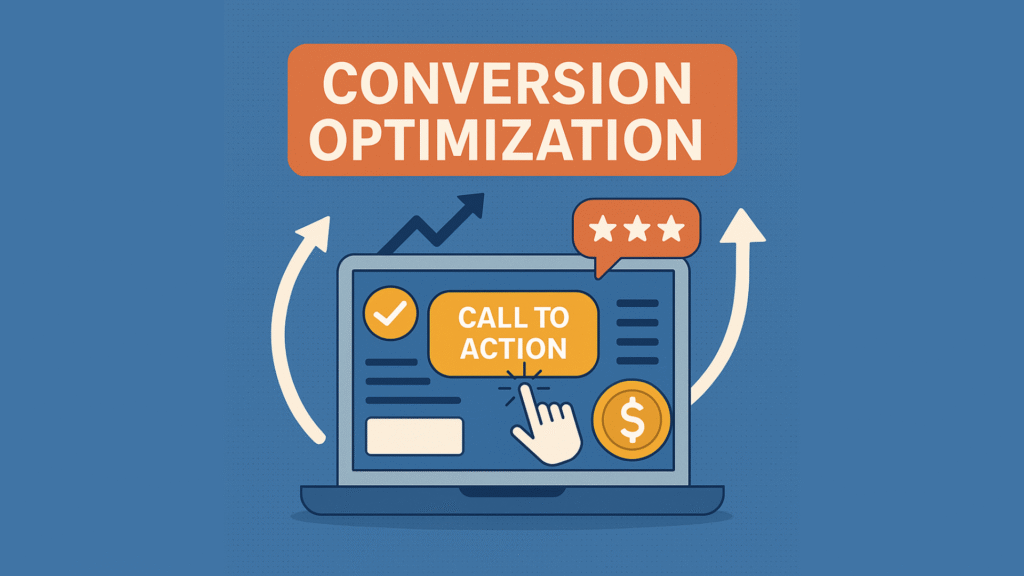
Is your website drawing traffic but failing to turn visitors into paying customers? Conversion optimization could be the game-changer you need. By fine-tuning your website and marketing strategies, you can transform how potential customers interact with your business, driving more leads, sales, and revenue. This guide will walk small and mid-sized businesses through the importance of conversion optimization, share proven strategies, recommend essential tools, and address common roadblocks that may hinder conversion success. By the end, you’ll have the tools to boost your bottom line and outshine competitors. Understanding the Impact of Conversion Optimization on Business Growth Conversion optimization is about getting more value out of your existing traffic. By improving how visitors interact with your website, you can increase conversions—whether that means completing a purchase, booking a service, or filling out a form. But why does this matter for your business? Benefits of High Conversion Rates   A higher conversion rate means you’re doing more with the traffic you already have. For instance, an HVAC company with 1,000 monthly visitors could double call volume by improving how well its website convinces visitors to book a service.   Optimizing your website reduces the need to spend excessively on ads for additional traffic. Instead, the focus shifts to ensuring existing visitors take the desired actions.   When your site provides a frictionless and engaging experience, it sets you apart. A dental office, for example, could attract more local patients by featuring easy-to-navigate appointment booking tools and clear pricing details.   Whether your focus is on filling appointment slots, generating more consultation requests, or boosting e-commerce sales, conversion optimization ensures your website supports these goals directly. Proven Strategies to Boost Conversion Rates Optimizing conversions doesn’t require a full site overhaul. Implementing just a few key strategies can drastically improve results. 1. Craft Compelling Calls-to-Action (CTAs)    Your CTAs play a pivotal role in guiding visitors. Use language that’s clear and action-oriented, such as “Book Your Free Consultation Today” or “Download Your Guide in Seconds.” Place CTAs prominently and ensure users encounter them naturally as they scroll through your site. 2. Enhance Website Usability    A slow or clunky website drives visitors away. Focus on mobile responsiveness, fast page load times, and intuitive navigation. For example, a med-spa could optimize its online booking system to work seamlessly on smartphones, where many potential clients browse. 3. Leverage A/B Testing    Testing different variations of pages can reveal what resonates best with your audience. For instance, try different designs for a roofing company’s estimate request form to see which one generates more leads. 4. Show Social Proof    Build trust by displaying customer testimonials, case studies, or industry awards. For personal injury law firms, showcasing client success stories or settlement data can reassure potential clients that they’re in capable hands. 5. Optimize Landing Pages    Tailor landing pages to align with specific customer needs. A dental practice might create separate pages for teeth whitening, braces, and emergency services with tailored content and CTAs for each. 6. Streamline Checkout Processes    Simplify online transactions by reducing unnecessary steps. An e-commerce site could enable guest checkout options or auto-fill functionality to boost completion rates. Top Tools to Drive Data-Driven Conversion Optimization Success Effective conversion optimization requires insights and the right tools. These platforms empower small and mid-size businesses to make smarter, results-driven decisions. 1. Heatmaps and User Insights    Tools like Hotjar and Crazy Egg show where users click, scroll, or drop off. For example, these insights might reveal that visitors aren’t noticing your pricing page link, prompting a redesign to make it more prominent. 2. CRM and Email Automation    Platforms like HubSpot or ActiveCampaign help you automate follow-ups and target prospects more effectively. An HVAC company could use email reminders to win over leads who haven’t finalized bookings. 3. A/B Testing Platforms    With tools like Google Optimize, you can experiment with layouts, images, and text to find winning combinations. For example, test whether a green or blue “Call Now” button drives more clicks for a plumbing service. 4. Performance Metrics and Analytics    Services like Google Analytics and Tag Manager uncover which sources drive conversions and where visitors drop off. Use this data to refine pages and add high-value content where it’s needed. Removing Roadblocks on the Path to Conversions Sometimes, even small barriers—such as load times or unclear policies—can derail conversions. Here are common hurdles and quick fixes: 1. Slow Site Speeds    Visitors may leave if your site takes more than 3 seconds to load. Compress images, enable browser caching, and use a reliable web hosting service to improve speeds. 2. Poor Navigation    If visitors can’t find critical information, they’ll leave. Use clear menus and ensure contact information is always easy to access. Imagine a law firm losing clients because the “Schedule Consultation” button is buried at the bottom of the page. 3. Lack of Trust Signals    Adding elements like SSL certificates, security badges, and customer reviews reassures visitors. A roofer could boost credibility with before-and-after photo galleries of completed projects and warranties for their work. 4. Checkout Abandonment    Retailers and service providers often lose visitors because of overly complicated payment systems. Add features like progress indicators or reminders for cart abandonment to re-engage customers. Actionable Takeaways for Immediate Impact With these strategies and tools in hand, small and mid-sized businesses are equipped to unlock their website’s full potential: Are you ready to boost conversions and grow your business? Take the first step today by evaluating your website’s current performance. Explore tools like Hotjar or Google Analytics to identify quick improvement areas, and start making changes that will lead visitors down the path to action. For tailored advice and solutions, reach out to our team, and we’ll help you dominate your local market.

CRO vs Traffic Unleash Your Genius
SEO

Why Traffic Alone Won’t Scale Your Business (And What Actually Will)

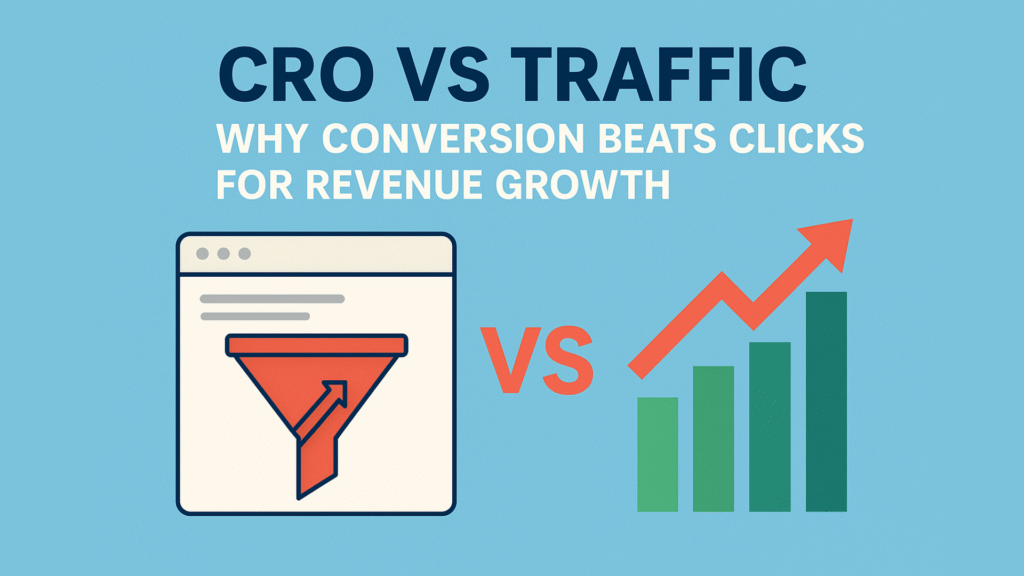
Getting more website traffic feels like winning the lottery. Your analytics dashboard lights up with green arrows, visitor counts climb, and everything seems to be moving in the right direction. But here’s the uncomfortable truth most agencies won’t tell you: traffic without conversions is just expensive entertainment. While your competitors are burning budgets on driving more clicks, smart businesses focus on conversion rate optimization (CRO) — the practice of turning existing visitors into paying customers. This shift from quantity to quality doesn’t just improve your bottom line; it fundamentally changes how your business grows. The math is simple, but the impact is profound. A 2% increase in your conversion rate delivers the same revenue boost as doubling your traffic — except it costs a fraction of the price and happens much faster. The Traffic Trap: Why More Visitors Don’t Mean More Revenue Most business owners operate under a dangerous assumption: more traffic equals more sales. This logic seems bulletproof until you examine the numbers. Consider a typical local service business spending $5,000 monthly on Google Ads. They’re driving 1,000 visitors to their website with a 2% conversion rate, generating 20 leads per month. When growth stagnates, the natural response is increasing ad spend to drive more traffic. Doubling the budget to $10,000 might deliver 2,000 visitors and 40 leads — but at what cost? The customer acquisition cost just stayed flat while the marketing budget doubled. Meanwhile, website speed issues, confusing navigation, and weak calls-to-action continue bleeding potential customers. The hidden costs of traffic-focused strategies include: Traffic-focused growth creates a hamster wheel effect. You’re running faster and spending more to maintain the same conversion efficiency. The CRO Advantage: Maximizing Your Existing Investment Conversion rate optimization flips this equation. Instead of paying for more visitors, you extract more value from traffic you’re already generating. Using the same example, imagine that business optimized their website and increased conversions from 2% to 4%. Those same 1,000 monthly visitors now generate 40 leads — matching the doubled ad spend results without additional traffic costs. The compound benefits of CRO include: Smart businesses understand that optimization improvements stack. A faster website helps both SEO rankings and conversion rates. Clearer calls-to-action improve both paid and organic traffic performance. Better mobile experience benefits every visitor regardless of how they found you. Real Numbers: CRO vs Traffic Growth ROI Let’s examine two identical roofing companies to illustrate the financial impact of these different approaches. Company A: Traffic-Focused Strategy To grow, Company A doubles their ad spend to $8,000, driving 4,000 monthly visitors. Revenue increases to $96,000, but ROI drops to 1200% — no efficiency gain. Company B: CRO-Focused Strategy Same starting metrics, but they invest $2,000 in website optimization: Company B achieves 46% higher revenue with 25% lower marketing spend. The optimization investment pays for itself in the first month and continues delivering returns indefinitely. Where CRO Creates the Biggest Impact Smart conversion optimization focuses on high-impact areas where small changes create dramatic results. Landing Page Performance Your landing pages are conversion battlegrounds. A/B testing headlines, calls-to-action, and form placement can increase conversion rates by 20-50%. For service businesses, this often means the difference between a profitable and unprofitable marketing campaign. Mobile Experience Optimization With 60% of searches happening on mobile devices, mobile conversion rates directly impact your bottom line. Faster load times, simplified forms, and thumb-friendly navigation can double mobile conversion rates. Trust Signal Integration Local service businesses win customers through trust. Strategic placement of reviews, certifications, before-and-after photos, and guarantees removes friction from the decision-making process. Call-to-Action Optimization The difference between “Contact Us” and “Get Your Free Roof Inspection” isn’t just copy — it’s psychology. Specific, benefit-focused calls-to-action can improve conversion rates by 35%. Building a CRO-First Growth Strategy Conversion-focused growth starts with understanding your current performance, identifying bottlenecks, and systematically testing improvements. Phase 1: Baseline Analysis Track conversion rates across all traffic sources, device types, and landing pages. Identify your highest-value pages and biggest drop-off points. This data becomes your optimization roadmap. Phase 2: High-Impact Testing Focus on elements that affect the most visitors first. Homepage improvements impact everyone; contact page optimization only affects visitors who reach that stage. Phase 3: Continuous Improvement Conversion optimization isn’t a one-time project. Market conditions change, user behavior evolves, and new opportunities emerge. Top-performing businesses treat CRO as an ongoing competitive advantage. Making the Shift: From Traffic to Conversion Focus The businesses that dominate their local markets understand this fundamental truth: optimization beats acquisition. While competitors fight over the same traffic sources, smart companies maximize the value of every visitor they already attract. This doesn’t mean abandoning traffic generation entirely. The most successful strategies combine targeted traffic acquisition with relentless conversion optimization. Every new visitor enters a system designed to convert them into customers, not just add to vanity metrics. Your next marketing dollar delivers better returns when invested in making your website work harder, not just attracting more visitors who leave without converting. The compound effect of optimization improvements creates sustainable, profitable growth that doesn’t require constantly increasing ad budgets. Ready to stop throwing money at traffic and start building a conversion machine? Your existing visitors are waiting to become customers — you just need to give them the right experience.

What is SEO Unleash Your Genius
SEO

What is SEO? A Comprehensive Guide to Search Engine Optimization

Have you ever wondered how certain websites always seem to dominate search results while others languish on page 3 (or beyond)? The secret is Search Engine Optimization (SEO)—a vital tool for improving a website’s visibility and attracting organic traffic. But what is SEO exactly , and how does it work? Whether you’re a small business owner or a corporate marketing director, understanding SEO is essential to staying competitive in today’s digital-first world. By the end of this post, you’ll have a solid grasp of SEO fundamentals and realize just how powerful it can be for your website’s success. And if you’re ready to take your site’s SEO to the next level, contact Gambix for expert guidance and cutting-edge solutions. What Is SEO? SEO, or Search Engine Optimization, is the practice of making a website more visible and accessible in search engine results pages (SERPs). By optimizing content, technical structure, and external factors, businesses aim to secure higher rankings for relevant search queries, thereby attracting free (organic) traffic. Unlike paid advertisements, SEO doesn’t rely on a budget to drive clicks, making it one of the most cost-effective ways to build long-term digital success. However, successful SEO does require strategic planning, industry expertise, and, most importantly, persistence. How Does SEO Work? Search engines like Google, Bing, and Yahoo use complex algorithms to decide which websites appear on the first page for any given search query (“best pizza near me,” “affordable SEO tools,” etc.). These algorithms evaluate hundreds of factors to determine relevance, value, and authority. Here’s a simplified overview:   Search engines “crawl” the internet to discover web pages, then store relevant information in a database called an index.   When someone enters a search query, the search engine analyzes its index and ranks the most relevant pages based on factors like keyword relevance, user experience (e.g., site speed and mobile-friendliness), and backlinks. SEO works by optimizing your website to excel in these steps, making sure search engines favor it over competitors’ sites. Key SEO Strategies Effective SEO involves a strategic combination of three main components: 1. On-Page SEO On-page SEO focuses on optimizing individual pages to make them more relevant and engaging. Key aspects include:   Identify words and phrases your audience uses to search for your products or services. Tools like Semrush or Google Keyword Planner can help.   Create high-quality content tailored to user intent. For example, articles answering specific questions or providing solutions to common problems.   Improve elements like site speed, mobile responsiveness, and HTTPS security to ensure visitors stay longer and interact more with your pages. 2. Off-Page SEO Off-page SEO builds your site’s authority and reputation, which signals search engines that your content is valuable. Important off-page strategies include:   Secure links from reputable websites in your industry. These act as endorsements, telling search engines, “This site knows its stuff.”   Engage with audiences on social media, respond to reviews, and establish your brand as a reliable authority in your field. 3. Technical SEO Technical SEO ensures that search engine bots can efficiently crawl and index your site. Factors include:   A clear, logical structure helps both users and search engines easily find content.   Faster-loading pages rank better and keep users engaged.   With over 60% of traffic coming from mobile devices, a mobile-friendly site is a must. Why is SEO Important for Your Business? SEO isn’t just about getting more traffic. It’s about attracting qualified leads actively looking for your products or services. Here’s why SEO should be at the heart of your digital strategy: 1. Low Cost, High ROI Unlike paid advertising, the traffic you gain through SEO is free, and its effects compound over time. With the right strategy, you can enjoy a steady flow of visitors without continually increasing your budget. 2. Enhanced Visibility By appearing on the first page of Google for relevant keywords, your business is more likely to attract potential customers. Research shows that 75% of users never click past the first page of search results. 3. Competitive Edge Your competitors are likely already investing in SEO. Without it, your business risks falling behind in visibility, credibility, and profitability. 4. Long-Term Results While it may take some time to see the impact of SEO, the long-term benefits far outweigh the initial investment. Once your site ranks highly, maintaining that position requires far less effort than reaching it. How Gambix Can Help with SEO Gambix specializes in helping businesses like yours achieve SEO success with cutting-edge AI-driven solutions. Unlike traditional methods, our approach is built for the modern age, offering personalized insights and faster results. Here’s what sets Gambix apart:   Our platform identifies optimization opportunities others might miss, from improving page load times to pinpointing underperforming keywords.   We cover every aspect of SEO—from technical audits and keyword research to backlink building and content creation.   Our clients consistently see improved rankings, higher call volumes, and better ROI thanks to tried-and-tested methods. Common FAQs About SEO What’s the difference between SEO and PPC? SEO focuses on organic (free) traffic by improving your site’s relevance and authority in search engine results. Pay-per-click (PPC) is a paid method where you bid to appear at the top of SERPs for specific keywords. Both have their merits, but SEO is often more cost-effective in the long term. How long does it take to see results from SEO? SEO is a long-term strategy. While some improvements (like content optimization) may show results in weeks, others (like building authority through backlinks) may take months. Typically, you’ll see noticeable results within 3–6 months. Is SEO still relevant in 2024? Absolutely! Search engines, especially Google, play a massive role in how users discover businesses online. SEO ensures your website remains visible and competitive, regardless of new trends or technologies. Take Back Control of Your Website’s Success Understanding and implementing SEO might seem daunting, especially when you’re busy running a business. But the rewards are worth it. If you want your website to rank higher, attract more genuine leads, and outperform your competition, Gambix is here to help.

Scroll to Top

Still thinking?