5 minutes = 21Ă— more qualified leads. We speed up your follow-up.

+1 301-701-2233

AI

Disadvantages of AI in Business Unleash Your Genius
AI

Disadvantages of AI in Business 

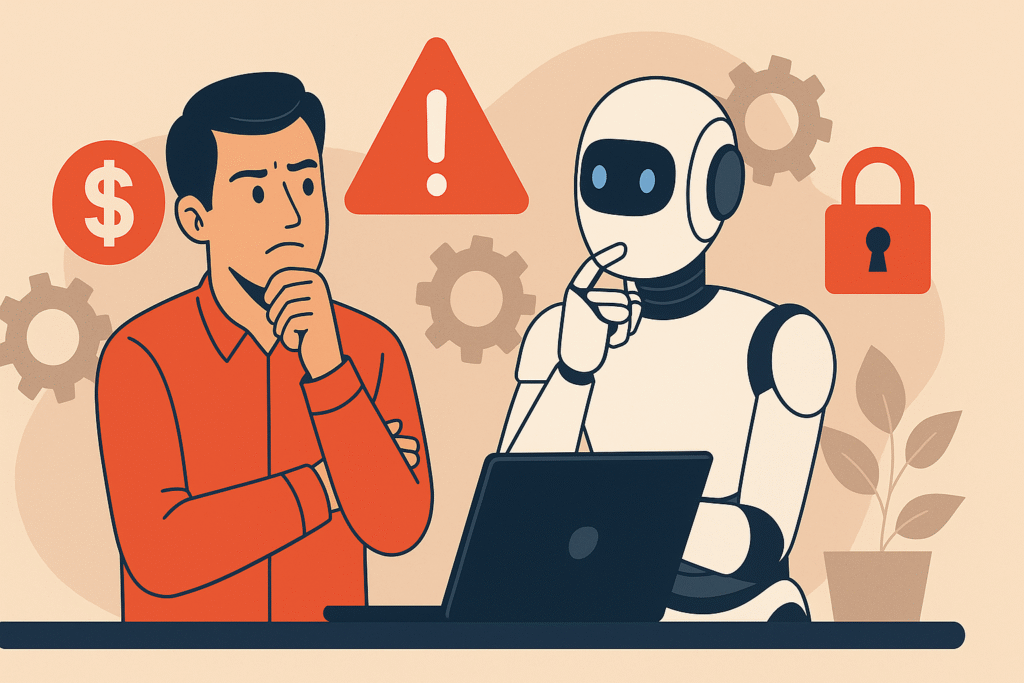
Artificial intelligence is a powerful tool, but without the right guidance, it can be like a supercar without a driver—all that potential, with a high risk of a crash. While many businesses are quick to embrace AI for its benefits, it’s just as important to understand its common drawbacks. This article explores the disadvantages of AI in business and shows how the right strategic partner can help you not only navigate these challenges but also transform them into a competitive advantage. Understanding the Disadvantages of AI in Business While the list of benefits of AI in business is extensive, businesses are often let down by AI. In many cases, it’s not the AI itself that’s the problem, but rather the misapplication and lack of a clear strategy. Without a proper plan, even the most advanced AI solutions can fail to deliver real value. The Key Disadvantages of AI in Business 1. High Initial Costs and Complexity The infrastructure required to implement AI can be expensive. For many small and medium-sized enterprises (SMEs), the upfront investment in hardware, software, and specialized talent is simply too high. This makes it difficult for them to compete with larger corporations that have bigger budgets. 2. Lack of Human Creativity and Emotional Intelligence AI excels at analyzing data and automating tasks, but it lacks the nuance of human creativity and empathy. While a machine can generate patterns and predict outcomes, it can’t provide a truly personalized, emotionally intelligent response to a customer’s unique needs. This is why a hybrid approach is essential. 3. Data Dependency and Bias AI models are only as good as the data they’re trained on. If your data is incomplete, outdated, or biased, your AI will produce skewed or inaccurate results. This can lead to poor business decisions, unfair outcomes, and damaged customer trust. The saying “garbage in, garbage out” is particularly true for AI. 4. Workforce Displacement Fears One of the most significant AI challenges is the fear it creates among employees. Many workers worry that AI will replace their jobs, leading to low morale and resistance to adoption. Businesses need to reframe AI not as a replacement, but as a tool for augmentation, empowering employees to be more productive and focus on higher-value work. 5. Security and Privacy Risks AI systems often require access to vast amounts of sensitive data, which can raise serious security and privacy concerns. Managing this data responsibly and ensuring compliance with regulations like GDPR and CCPA is a major challenge. A data breach involving an AI system could be catastrophic. 6. Implementation Without a Strategy Many businesses fall into the trap of implementing AI tools simply because they are trendy, without integrating them into a clear business strategy. This scattergun approach leads to wasted resources and poor ROI. Without a plan, the AI solution won’t solve a business problem and will ultimately be seen as a failure. How the Right Partner Turns AI’s Disadvantages Into Advantages The philosophy is simple: AI alone isn’t enough; AI with a clear vision changes everything. The limitations of AI become opportunities when you have a strategic partner to help you navigate them. By combining technology with a human-centric approach, you can overcome common AI adoption issues and unlock real business value. Just as a strategic approach to SEO Meaning in Business turns a digital marketing tool into a source of tangible ROI, a thoughtful approach to AI can transform its disadvantages into a source of competitive advantage. The Future: AI + Human Creativity The future of business isn’t about AI replacing humans; it’s about a hybrid model where AI handles the scale and efficiency, and humans provide the nuance, creativity, and empathy. The key is to build the bridge between these two forces. Don’t Just Adopt AI. Unleash It. The disadvantages of AI in business are real, but they are not insurmountable. By addressing issues like high costs, data bias, and workforce fears head-on and integrating AI with human creativity and a solid strategy, you can turn its limitations into your greatest advantages. Don’t just adopt AI. Unleash it.

Benefits of AI in Business Why Artificial Intelligence Is a Game Changer Unleash Your Genius
AI

Benefits of AI in Business: Why Artificial Intelligence Is a Game-Changer

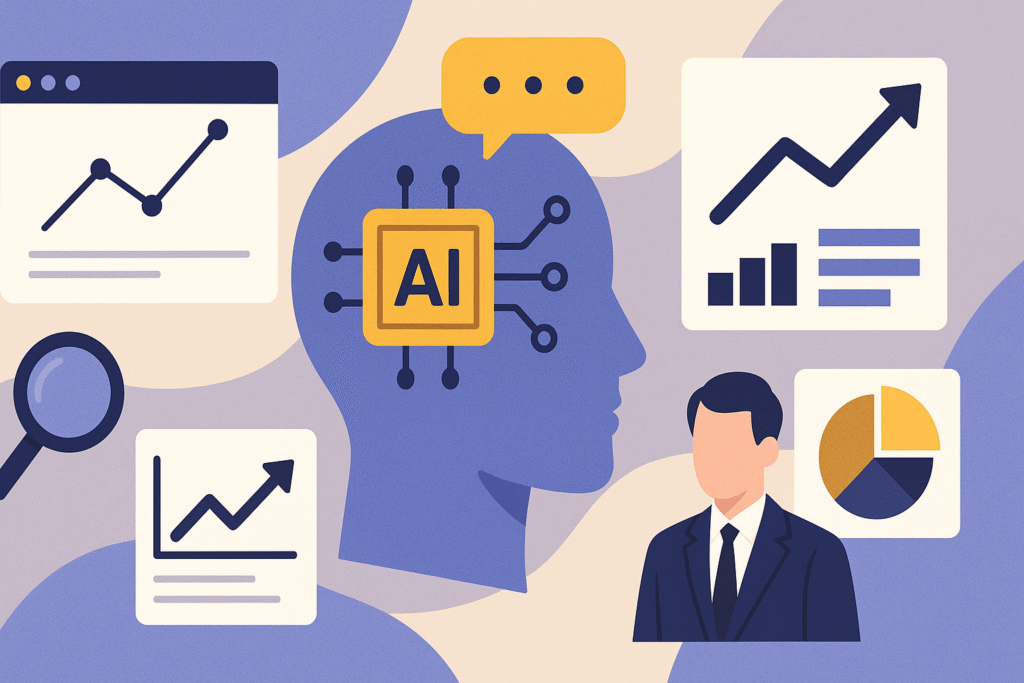
Artificial intelligence (AI) is no longer a concept confined to science fiction; it’s the engine powering modern business growth. From the personalized recommendations on your favorite shopping site to the automated chatbots that answer your questions instantly, AI is already woven into the fabric of our daily lives. For businesses, this technology isn’t just about buzzwords—it’s about creating tangible value. Companies of all sizes are leveraging AI in business operations to increase efficiency, cut costs, and get a competitive edge. If you’re wondering how AI can transform your organization, you’ve come to the right place. What Does AI in Business Mean? At its core, artificial intelligence in a business context refers to the use of smart technologies that can perform tasks that typically require human intelligence. This includes everything from analyzing vast amounts of data to understanding natural language and recognizing patterns in images. Some of the key AI technologies being used today include: Just as a solid understanding of a topic like What is SEO and How Does It Work? is crucial for digital growth, grasping how these AI advantages for companies can be applied is essential for future-proofing your business. Key Benefits of AI in Business Businesses are finding that the benefits of AI extend across every department, from finance to marketing. Let’s explore some of the most significant advantages. 1. Increased Efficiency and Productivity One of the most immediate gains from implementing AI is a boost in productivity. AI can take over repetitive, time-consuming tasks like data entry, report generation, and customer service inquiries. By automating these workflows, human employees can focus on more strategic and creative work that requires critical thinking and problem-solving. AI assistants can also streamline internal processes, helping teams collaborate more effectively and get things done faster. 2. Cost Savings When a business automates tasks, it significantly reduces the need for manual labor hours. This leads to cost savings and a reduction in human error. AI-powered forecasting tools can also help companies predict demand and manage inventory more accurately, which minimizes waste and saves money. 3. Enhanced Decision-Making AI systems can analyze massive datasets in minutes, something that would be impossible for a human to do. This provides businesses with deep, data-driven insights that lead to better, more informed decisions. By using predictive analytics, you can forecast market trends, identify potential risks, and optimize your strategies for maximum impact. Just as understanding the SEO Meaning in Business helps you make data-driven decisions about your digital presence, AI provides the data you need to make smart moves across your entire operation. 4. Improved Customer Experience Customers today expect quick, personalized service. AI chatbots and virtual assistants can provide 24/7 support, answering common questions and resolving issues instantly. AI-powered recommendation engines, like the one used by Amazon, can also analyze customer behavior to offer highly personalized product suggestions, which boosts sales and loyalty. 5. Innovation and Competitive Advantage Adopting AI can give you a powerful edge over competitors. It allows you to develop new products and services, discover new markets, and optimize existing operations in ways that other businesses can’t. From Tesla’s self-driving technology to AI-driven drug discovery in healthcare, AI use cases are pushing the boundaries of what’s possible. 6. Scalability for Growth Whether you’re a small startup or a global enterprise, AI systems can handle massive amounts of data and workload without a dip in performance. This makes AI an ideal technology for businesses looking to scale their operations efficiently. Unlike human teams that need to grow in size to handle more work, an AI system can be scaled up or down with minimal effort. Real-World Examples of AI in Business Looking for concrete artificial intelligence business examples? Here are a few to illustrate how companies are leveraging AI for success: Challenges and Limitations of AI in Business While the AI ROI is clear, it’s not without its hurdles. Businesses need to be mindful of ethical concerns, such as potential bias in algorithms and data privacy issues. Implementing AI can also require a significant upfront investment, which may be a barrier for smaller businesses. Additionally, the skills gap in the workforce can make it difficult to find employees who know how to effectively implement and manage AI systems. Future Outlook: Where AI in Business Is Heading The future of AI in business is one of collaboration, not replacement. The rise of generative AI is creating new opportunities for businesses to automate creative tasks, from writing marketing copy to designing product prototypes. The trend is moving toward a future where AI and humans work side-by-side, with AI handling the data-heavy lifting and humans focusing on the strategic, creative, and emotional aspects of business. Why Businesses Should Embrace AI Now The benefits of AI in business are undeniable: increased efficiency, significant cost savings, better decision-making, a superior customer experience, and a powerful competitive edge. While challenges exist, the path forward is clear. Instead of trying to transform your entire business at once, consider starting small. Implement an AI chatbot on your website, use a simple analytics tool to gain insights, or explore an automation platform for your most repetitive tasks. Taking these small steps today can prepare your business for a future powered by artificial intelligence.

Scroll to Top

Still thinking?